
Category: Insights

  • 7 Signs You’ve Settled for a Detail Vendor

    7 Signs You’ve Settled for a Detail Vendor

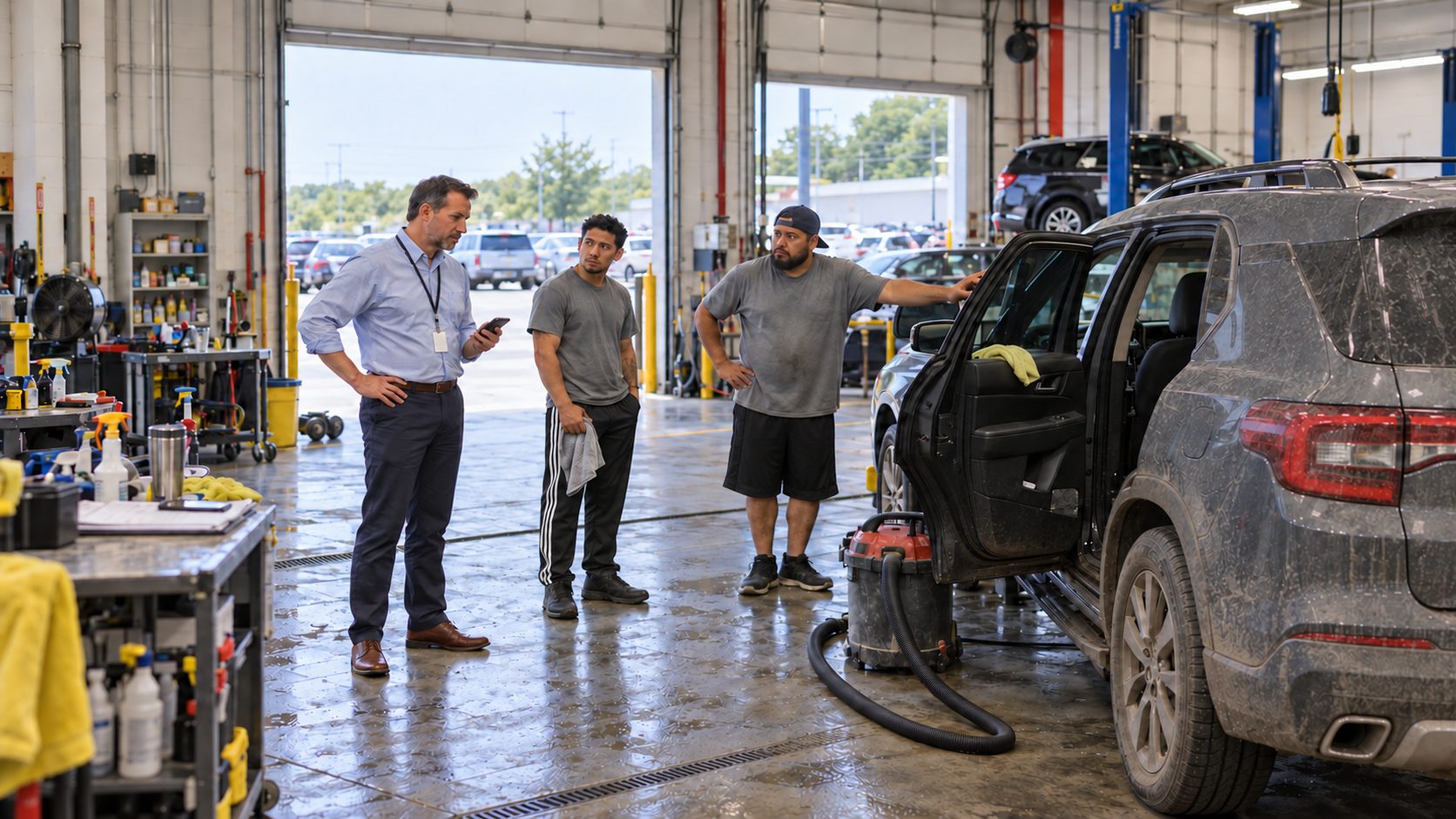
    Most dealerships don’t choose a bad detail company. They choose one that seemed fine, and then slowly get used to it. The late car becomes normal. The redo becomes normal. A manager spending half an hour a day on detail becomes normal.

    That’s what settling looks like. Not a disaster, just a steady drain that nobody puts on a spreadsheet. Here are seven signs it’s happening in your store, and what it should look like instead.

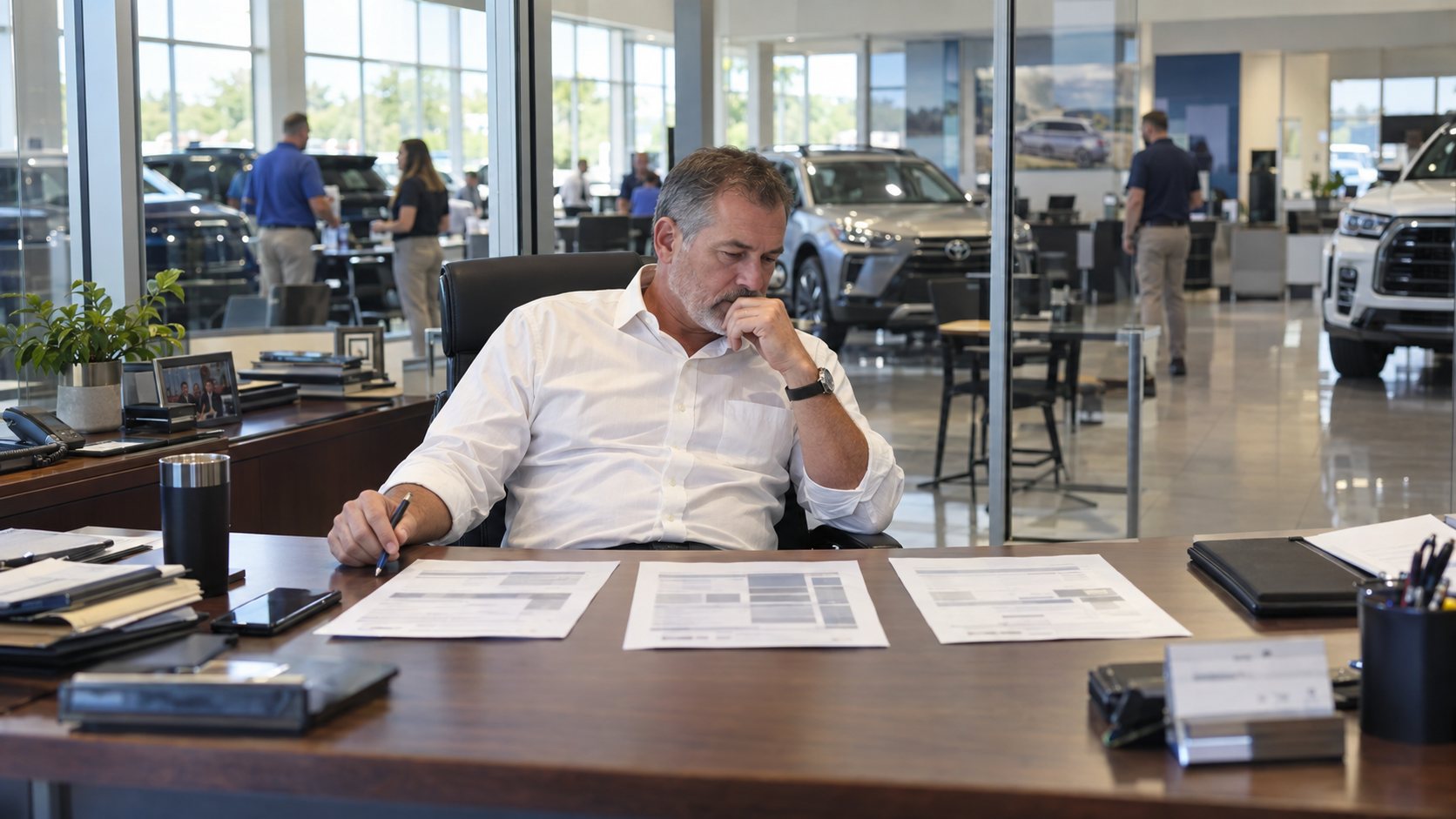
    1. Your managers know your detailers by name, because they have to supervise them.

    If your used car manager is telling detailers which cars to do first, checking their work and calling when someone doesn’t show, he is running your detail department. He just isn’t being paid to.

    What it should look like: your managers know one name, the person who runs detail for you, and that person handles the rest.

    2. You find out about quality problems from customers.

    A missed interior or a dirty door jamb at delivery isn’t a detailing problem. It’s an inspection problem. If nobody checks the car before your salesperson sees it, your customer becomes the inspector.

    What it should look like: every car is checked against a written standard by someone accountable for it, and problems get fixed before they leave the bay.

    3. “We’re short today” is a normal sentence.

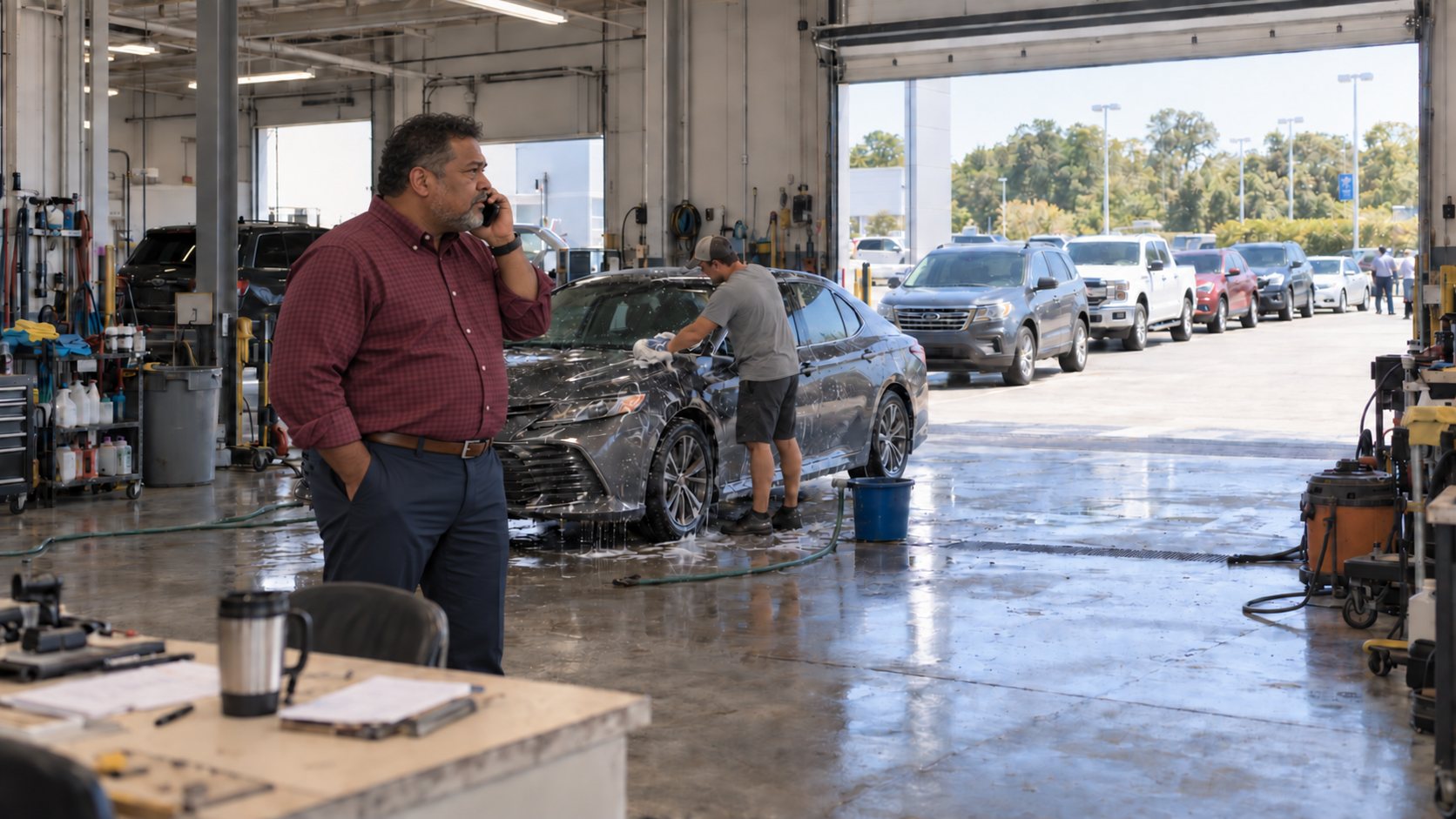
    People quit, get sick and don’t show up. That’s the reality of the work. The question is whose problem it becomes. If a missing detailer means your cars wait, the vendor has handed their staffing problem to you.

    What it should look like: coverage is the operator’s job. You shouldn’t know someone called out unless you ask.

    4. Quality depends on who’s working that day.

    If you can tell the difference between Tuesday’s cars and Thursday’s cars, there is no standard. There are just individual habits.

    What it should look like: one written standard, trained into every person, checked every day. The car looks the same no matter who touched it.

    5. Every morning, someone from your team has to tell detail what’s first.

    A delivery at ten, three trades for the line, a loaner going out at noon. If detail doesn’t know that until one of your managers walks back and says it, detail is reacting, not operating.

    What it should look like: priorities are set with your managers at the start of the day, and deliveries are protected first without anyone having to ask.

    6. Nobody above the worker level has been in your store this month.

    Ask yourself when someone from your detail company’s leadership last walked your lot. If the only people you ever see are the ones holding a towel, there is nobody watching the operation, so you are.

    What it should look like: a leader on site every day, and someone above that leader in your store every week, checking quality and talking to your managers.

    7. When you complain, things get better for a week.

    This is the clearest sign of all. A real fix changes the process. A temporary fix changes behavior until everyone forgets. If you’ve had the same conversation three times, you’re not getting fixes, you’re getting apologies.

    What it should look like: a problem gets traced to its cause, the process changes, and you don’t have that conversation again.

    Why it happens

    None of this means your detailers are bad people or don’t work hard. Most of them work very hard. The problem is structural. Most detail companies sell labor: people who can clean cars. Nobody in that model is responsible for the department itself, so the department falls back on the one group that can’t ignore it, your managers.

    A dealership doesn’t need someone who can wash cars. It needs a department that runs at the pace and pressure of a franchise store, and owns its results instead of waiting to be chased.

    What to do if you recognized your store

    Count how many of the seven signs apply. If it’s three or more, your managers are running a department that should be running itself. For a fuller check, take the five-minute Detail Department Scorecard.

    Prime One operates the detail department inside franchise dealerships: a Prime One manager on site every day, a trained team, and an Operations Manager in your store every week.
    Schedule a sit-down →

  • In-House, Vendor or Operator: An Honest Comparison

    In-House, Vendor or Operator: An Honest Comparison

    There are three ways to run the detail department at a franchise dealership: do it yourself, hire a crew, or bring in an operator. We run detail departments for a living, so you know where we land. But each option genuinely works for some stores, and the right answer depends on yours. Here’s a fair look at all three.

    Option 1: Run it in-house

    You hire the detailers, train them, schedule them and supervise them. You cover call-outs. You buy the chemicals, the equipment and the supplies. You carry the liability. And somebody on your management team gives it attention every single day.

    When it works: you have a strong detail manager who knows the work, wants to stay, and has the authority to run the department like a department. Your volume justifies a dedicated leader.

    When it breaks: that person leaves, gets promoted, or burns out. The department doesn’t stop, it just quietly lands on a used car manager or a service manager who already has a full-time job. Turnover, training and coverage become their problem, one week at a time.

    The honest cost: payroll is the number everyone sees. The cost nobody tracks is management time, and the deliveries and frontline days that slip when detail has nobody watching it.

    Option 2: Hire a detail crew

    A vendor sends people who can clean cars. They do the work they’re pointed at. The pointing is up to you.

    When it works: lower volume, simple needs, and someone at your store with the time and patience to direct the crew every day.

    When it breaks: priorities change mid-day, someone calls out, or quality starts to depend on who showed up. Without a leader of their own on site, the crew looks to your managers for every decision. You’ve outsourced the labor, but kept the management.

    The honest cost: usually the lowest price on paper. The difference shows up in your managers’ day, not on the invoice.

    Option 3: Bring in an operator

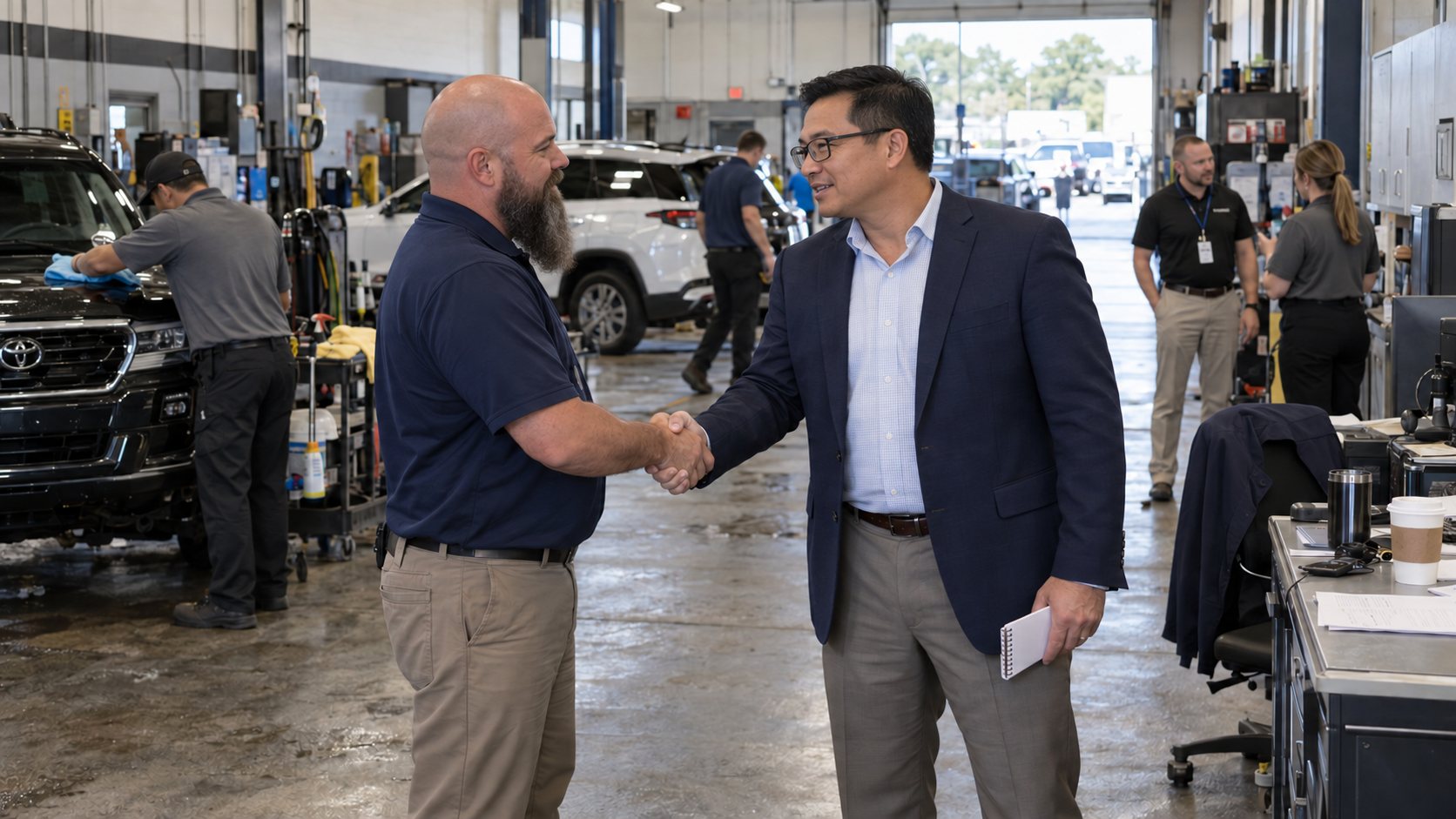
    An operator runs the department, not just the labor. That means a manager on site whose whole job is detail, a trained team behind them, someone above that manager checking in regularly, and leadership you can call when something needs a decision.

    When it works: you want the department run, not just staffed, and you want your managers back on selling and servicing cars.

    What it asks of you: a couple of minutes each morning to set priorities, a covered place to work, and the basics like compressed air. Everything else, from hiring and coverage to quality and supplies, is the operator’s job.

    The honest cost: usually more than a crew. The question is what you’re comparing it to. Measured against the management time, the redos and the late deliveries a crew leaves behind, many stores find it costs less overall.

    How to decide

    Ask one question: who is accountable for the detail department when nobody from your store is looking? If the answer is a strong manager of your own, in-house may be right for you. If the answer is “one of our managers, when they have time,” you’re paying for that time whether you see the bill or not.

    A department isn’t truly outsourced if your managers still have to manage it.

    Prime One operates the detail department inside franchise dealerships: a Prime One manager on site every day, a trained team, and an Operations Manager in your store every week.
    Schedule a sit-down →

  • Why Detail Contractors Don’t Last at Dealerships

    Why Detail Contractors Don’t Last at Dealerships

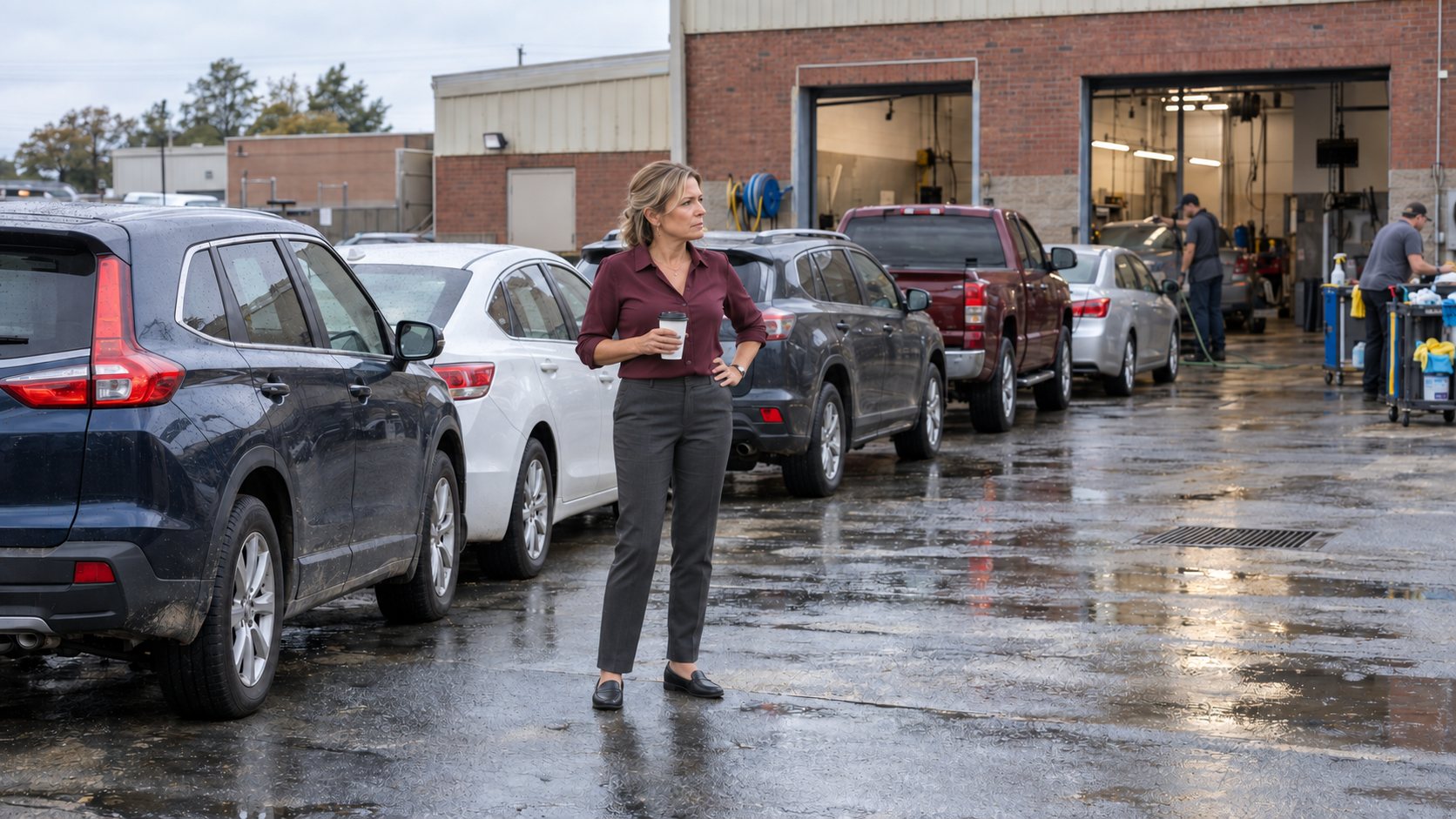
    Talk to enough GMs and you hear the same story. The detail company was great for the first few months. Then the good detailer left. Then quality slipped. Then the conversations started. A year later, there’s a new company, and the cycle starts again.

    Most detail contractors don’t fail because they can’t clean cars. They fail for reasons built into the way they’re set up. Here are the five we see most.

    1. Nobody is in charge on site

    The contractor’s best person is usually the one doing the most cars, not the one running the day. Without a leader whose job is the department itself, priorities, coverage and quality checks fall back to the dealership’s managers.

    What’s different with an operator: a dedicated manager on site every day, whose only job is making detail run.

    2. Turnover with no bench

    Detailing is hard work and people move on. That’s normal. What isn’t normal is a contractor with no plan for it. When one person leaves and there’s nobody trained to step in, your cars wait while they hire.

    What’s different with an operator: hiring, training and coverage are part of the job, with a bench of trained people behind every store.

    3. No written standard

    If quality lives in one detailer’s head, it leaves when they do. Without a written standard that every person is trained to, the car looks different depending on who touched it.

    What’s different with an operator: one standard, trained into every person, checked on every car.

    4. No relationship above the worker

    When the only people from the contractor you ever see are the ones holding a towel, nobody above them knows what’s happening in your store, until you call to complain.

    What’s different with an operator: someone above the store manager in your building every week, checking the work and talking with your managers.

    5. Competing on price until quality goes

    Many contractors win the account by being the cheapest. Then the only way to protect the margin is fewer people, cheaper products or less supervision. You don’t see it on the invoice. You see it on the front line.

    What’s different with an operator: a price built around running the department properly, agreed in writing, with no surprises.

    The pattern underneath

    All five come back to one thing: the contractor sells labor, and nobody in that model owns the department. The dealership ends up owning it by default.

    If any of this sounds familiar, start with 7 Signs You’ve Settled for a Detail Vendor.

    Prime One operates the detail department inside franchise dealerships: a Prime One manager on site every day, a trained team, and an Operations Manager in your store every week.
    Schedule a sit-down →

  • What Happens to Your Detail Department When Your GM Changes

    What Happens to Your Detail Department When Your GM Changes

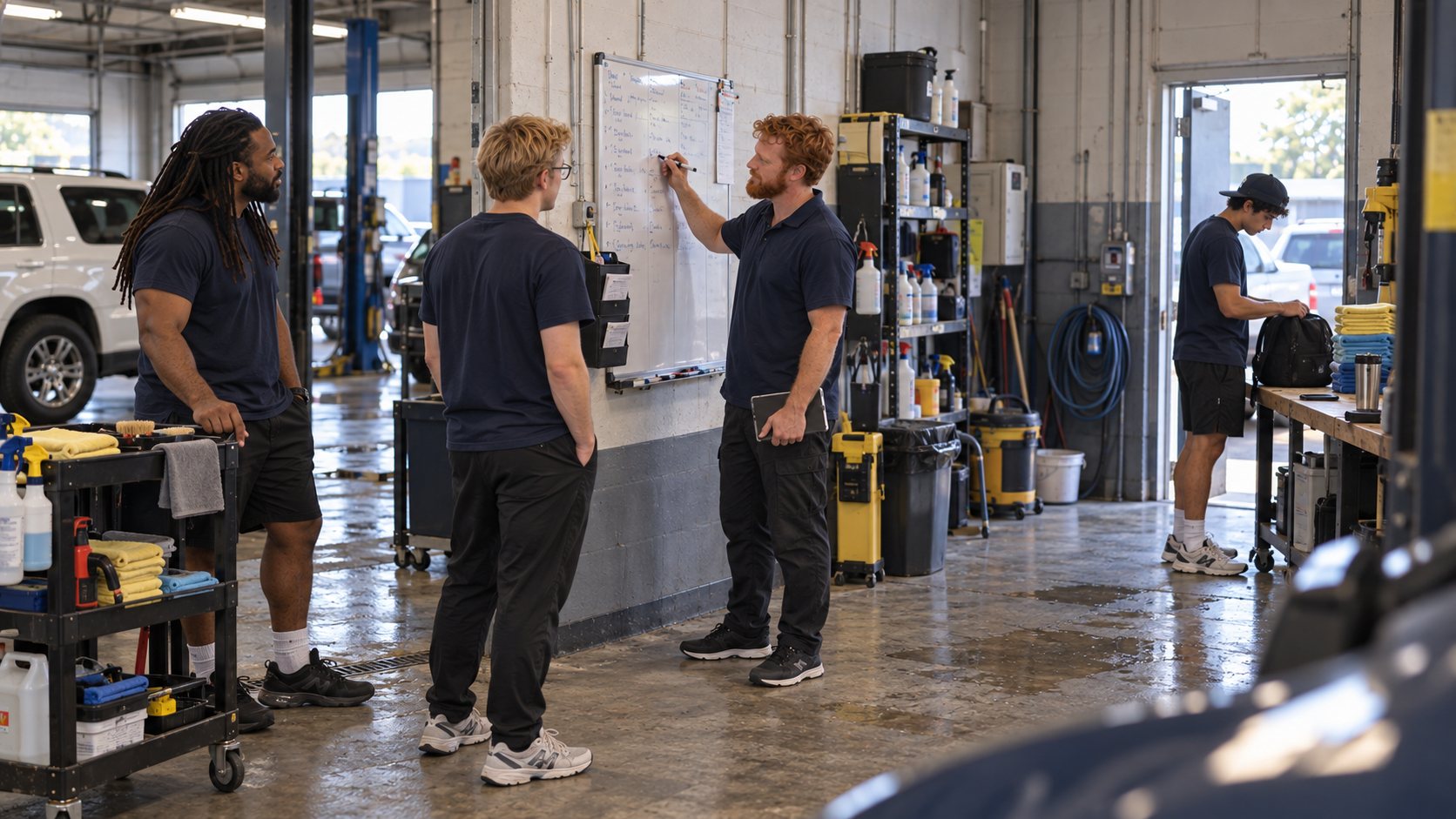
    A new general manager walks in. Within a few weeks, they’re looking at every vendor in the building, asking the same question: what does this company actually do for us?

    For a lot of detail companies, nobody has a good answer. The relationship lived with the old GM. There’s nothing written down, no history, and a cheaper company already knocking on the door. That’s the moment most detail relationships end.

    Why it happens

    In many stores, the detail arrangement is a handshake between one manager and one vendor. It works as long as both people stay. When the GM changes, the new leader inherits a department with no clear owner, no written expectations, and no one who can explain how it runs.

    From the new GM’s chair, that looks like a cost with no story behind it.

    What a well-run department looks like during a transition

    If the detail department is run properly, a leadership change is a non-event. Here’s what should already be in place:

    • A named person who runs detail on site, who the new GM can meet on day one.
    • Written standards and a written agreement, so expectations don’t walk out the door with the last GM.
    • Someone above that on-site manager who introduces themselves to the new GM in the first week, not the first time something goes wrong.
    • A track record the managers can speak to. The used car manager and service director who see detail every day are the best witnesses.

    What new GMs should ask

    If you’re the new GM, a few questions tell you quickly whether the department is being run or just staffed:

    • Who runs detail here every day, and can I meet them?
    • What standard is every car checked against, and who checks it?
    • What happens when someone calls out?
    • When was someone from the detail company’s leadership last in the store?

    The point

    A detail department that depends on one relationship is fragile. A department that runs on structure, people and standards keeps running no matter who sits in the GM’s office. That’s what one less department to worry about actually means.

    Prime One operates the detail department inside franchise dealerships: a Prime One manager on site every day, a trained team, and an Operations Manager in your store every week.
    Schedule a sit-down →

  • The Real Cost of a Car Waiting on Detail

    The Real Cost of a Car Waiting on Detail

    Ask most stores what detail costs and you’ll get one number: what they pay the detail company. That’s the smallest part of the bill. The bigger costs never show up on an invoice, because they show up everywhere else.

    Cars that aren’t on the line aren’t for sale

    A used car waiting on detail can’t be photographed, can’t go online, and can’t be shown. Meanwhile the clock is running on floor plan, depreciation and reconditioning time. Every day between “traded in” and “frontline ready” is a day that car is costing money and earning none.

    Deliveries that slip

    A customer who waits at delivery, or drives off in a car that isn’t quite right, remembers it. It shows up in their survey, in their review, and in whether they come back to your service drive. Detail is one of the last hands on the car before it becomes theirs.

    Your managers’ time

    This is the cost almost nobody tracks. Every time a sales manager walks back to the bay to ask where a car is, every morning a used car manager spends sorting out what goes first, every call about someone who didn’t show up: that’s your most expensive labor doing a job that isn’t theirs.

    Redos and comebacks

    A car that gets detailed twice was paid for twice, in time if not in money. Add the cars that bounce back from a manager’s inspection, or worse, from a customer.

    Do the math for your store

    You don’t need an industry study. You have better numbers than any study, because they’re yours. Sit down with your used car manager and estimate:

    • How many days, on average, a car waits between trade-in and frontline ready, and how much of that wait is detail.
    • What a day of holding costs you per car, counting floor plan and depreciation.
    • How many hours a week your managers spend on detail: checking, directing, chasing and covering.
    • How many cars a month get redone, and how many deliveries started late because a car wasn’t ready.

    Multiply it out over a month. For most stores, the hidden cost of a department nobody owns is a lot bigger than the line item they’ve been trying to shave.

    The takeaway

    The cheapest detail department isn’t the one with the lowest price. It’s the one that gets cars to the line fastest, gets deliveries out on time, and takes the least of your managers’ attention.

    Prime One operates the detail department inside franchise dealerships: a Prime One manager on site every day, a trained team, and an Operations Manager in your store every week.

    Schedule a sit-down →

  • What a Detail Department Manager Actually Does All Day

    What a Detail Department Manager Actually Does All Day

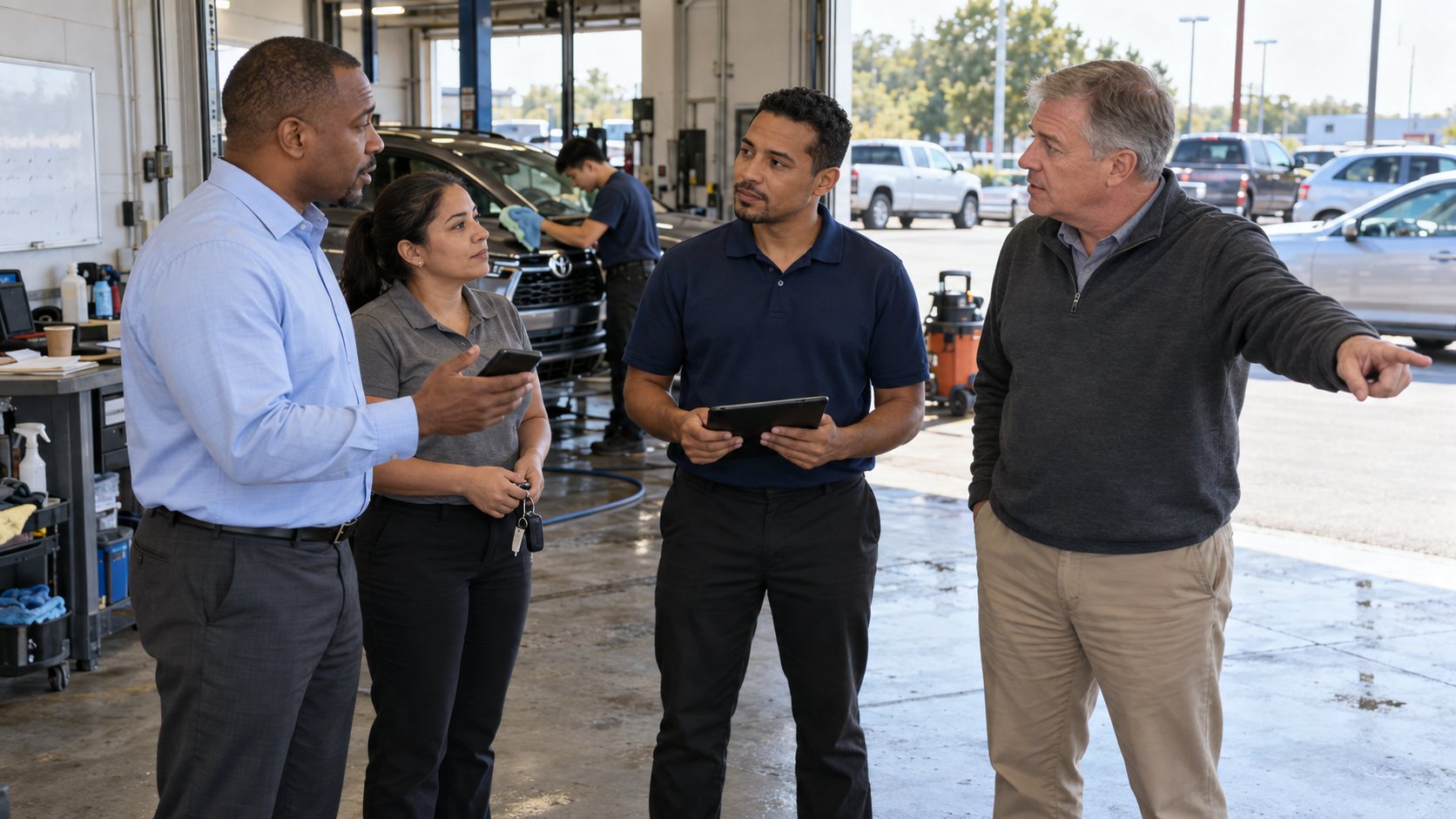
    In most detail operations, the most important role doesn’t exist. There are people who clean cars, and there are dealership managers who end up directing them. The space in between, someone whose whole job is running the department, is empty. Here’s what that job looks like when it’s done properly.

    Before the store opens

    The day starts with the plan. What’s delivering today, and when? Which trades need to hit the line? Which loaners are going out? The manager checks in with the dealership’s managers, sets the order of work, and makes sure deliveries are protected first.

    The morning brief

    A few minutes with the team: who’s on what, what’s urgent, what changed overnight. If someone called out, the manager has already moved people around so nobody at the dealership has to hear about it.

    Through the day

    Priorities move by the hour. A customer shows up early. Service needs two loaners now, not at noon. The manager re-sorts the work, keeps the dealership’s managers informed without making them ask, and handles problems before they turn into phone calls.

    The final check

    Every car gets inspected against the written standard before it leaves the bay. Not by the person who detailed it, but by someone accountable for the result. Problems get fixed in the bay, not discovered at delivery.

    People, safety and supplies

    The manager coaches the team, keeps everyone on the safety program, makes sure the right products and equipment are on hand, and flags hiring needs before they become gaps.

    End of day

    What got done, what’s carrying over, what tomorrow looks like. The dealership’s managers go home knowing where every car stands, without having had to chase it.

    Why it matters

    When this role exists, your managers deal with one person instead of a department. When it doesn’t, your managers are doing this job on top of their own. That’s why at Prime One, every store has a Prime One manager on site, every day.

    Prime One operates the detail department inside franchise dealerships: a Prime One manager on site every day, a trained team, and an Operations Manager in your store every week.
    Schedule a sit-down →

  • Questions to Ask Before You Hire a Detail Company

    Questions to Ask Before You Hire a Detail Company

    In a sales meeting, every detail company sounds about the same. Quality people, great communication, competitive price. The difference shows up three months later. These questions help you see it before you sign.

    Leadership and accountability

    • Who runs the department on site every day, and is that their whole job?
    • Who above that person will be in my store, and how often?
    • If I have a problem, who do I call, and how fast will they answer?

    People and coverage

    • What happens when someone calls out? Who covers, and how will I know?
    • How do you hire and train? How long before a new detailer works on my customers’ cars?
    • What’s your plan when a key person leaves?

    Quality

    • What standard is every car checked against? Can I see it in writing?
    • Who does the final inspection, the person who detailed the car or someone else?
    • How do you handle a car that comes back?

    Safety and liability

    • How are your people trained on chemicals and protective gear?
    • What insurance do you carry for work on dealership vehicles, and what happens if a car is damaged?

    The working relationship

    • How do you get priorities from my managers each morning?
    • What do you need from us: space, equipment, utilities?
    • Is the agreement in writing, and what’s the notice period?
    • What do your current dealers say? Can I call a GM you work with today?

    What the answers tell you

    Listen less for the right words and more for specifics. A company that runs departments will answer with names, routines and examples. A company that sells labor will answer with reassurance.

    We’re glad to answer every one of these. Schedule a sit-down and ask us.

    Prime One operates the detail department inside franchise dealerships: a Prime One manager on site every day, a trained team, and an Operations Manager in your store every week.

    Schedule a sit-down →

  • PDI, Clean-for-Delivery, Lot Refresh: Who Should Own What

    PDI, Clean-for-Delivery, Lot Refresh: Who Should Own What

    Ask three managers what “detail” covers and you’ll get three answers. Sales thinks deliveries. Used cars thinks recon. Service thinks loaners and washes. They’re all right, and that’s exactly why the department needs one owner. Here’s a plain guide to the work, especially useful for newer managers.

    Full details on used cars

    The complete interior and exterior reconditioning of a pre-owned vehicle. It’s one of the biggest steps between trade-in and the front line. New cars don’t need it: they haven’t been owned, so they get PDI prep instead, which is much lighter work.

    PDI preparation

    Pre-delivery inspection prep on new inventory: removing protective materials and getting the car presentable as it moves from the truck to the lot.

    Clean-for-delivery

    The final preparation right before a customer takes the car. Short, but it’s the moment that counts most. Deliveries should always come first.

    Lot refreshes and frontline presentation

    Keeping cars on the lot looking ready to buy: rinsing off dust and pollen, keeping the front line sharp through the week, and reworking cars that have sat.

    Loaners

    Turning loaner vehicles around quickly and cleanly so service always has one ready when a customer needs it.

    Service washes

    Customer cars leaving service a little cleaner than they came in. Small touch, big impression, and it shouldn’t slow down the drive.

    Why one owner matters

    Each of these is simple on its own. The hard part is that they all compete for the same people, the same bay and the same afternoon. When each department pushes its own priorities, detail ends up reacting to whoever asked last.

    One owner fixes that: one person who takes the day’s priorities from your managers, sets the order of work, and makes sure deliveries are protected first. That’s the difference between a detail crew and a detail department.

    Prime One operates the detail department inside franchise dealerships: a Prime One manager on site every day, a trained team, and an Operations Manager in your store every week.

    Schedule a sit-down →